
RESTORED BROWSER GAME · 18+Temple of
Temple of
the Jackal
Rotate the chamber, redirect gravity, and solve 18 color-driven rooms. Mature content loads only after you confirm your age.
Temple of the JackalAdult · 18+

Restored browser play · 18+
PLAY MORE
Switch games here
Choose another browser game without leaving the studio. The current game stays in the shelf.


POST-EXPEDITION
What did the temple teach you?
Compare how you solved, explored, and interpreted the descent. Choose one answer per chamber to unlock a spoiler-light reading of your run.
Result locked
Choose three answers
Your play-style reading, three measured traits, local history, and share-card controls appear as soon as every question has an answer.
The restored build documents two mature scenes unlocked through progress, not a verified branching-ending tree. This unofficial discussion reads your play style; it does not invent canon.
THE EXPEDITION
A small chamber with no fixed ground.
Temple of the Jackal compresses its challenge into a square arena where orientation is temporary. Match color relationships, rotate left or right, and make gravity carry the character toward a route that did not exist a moment earlier.
The clean rules support a stranger atmosphere. Progress unlocks two mature story scenes, while the quiet spaces between them invite players to decide what the temple—and the journey through it—might mean.
FIELD RECORDINGS
Watch the chamber turn.
These two videos show the scale, visual rhythm, and puzzle flow before you enter the restored build.
Deeper into the temple
EXPEDITION NOTES
How to think inside a rotating room.
This original, spoiler-light companion explains how to read the mechanics, protect the surprise of later chambers, and discuss the mature story without turning speculation into fact.
Enter for the mechanism, stay for the mood
Temple of the Jackal is easiest to describe as a compact gravity puzzle, yet that label misses its particular tension. Each chamber is small enough to read at a glance, but the room is never as stable as it first appears. Rotation changes what the floor means, where the character can settle, and which colored surfaces can become a route. The result is a game about revising your interpretation rather than executing a long sequence of reflexes. A failed attempt is useful because it exposes a relationship you did not notice. A successful attempt feels less like overpowering a trap and more like persuading the architecture to reveal its logic. This restored browser presentation keeps that intimate scale. Instead of surrounding the game with a crowded arcade interface, the page puts the launch control, age notice, fullscreen option, and a compact game shelf close to the frame. You can begin quickly, step away after a room, or switch back to The Choicer Voicer without losing your place in the site.
Read color as structure, not decoration
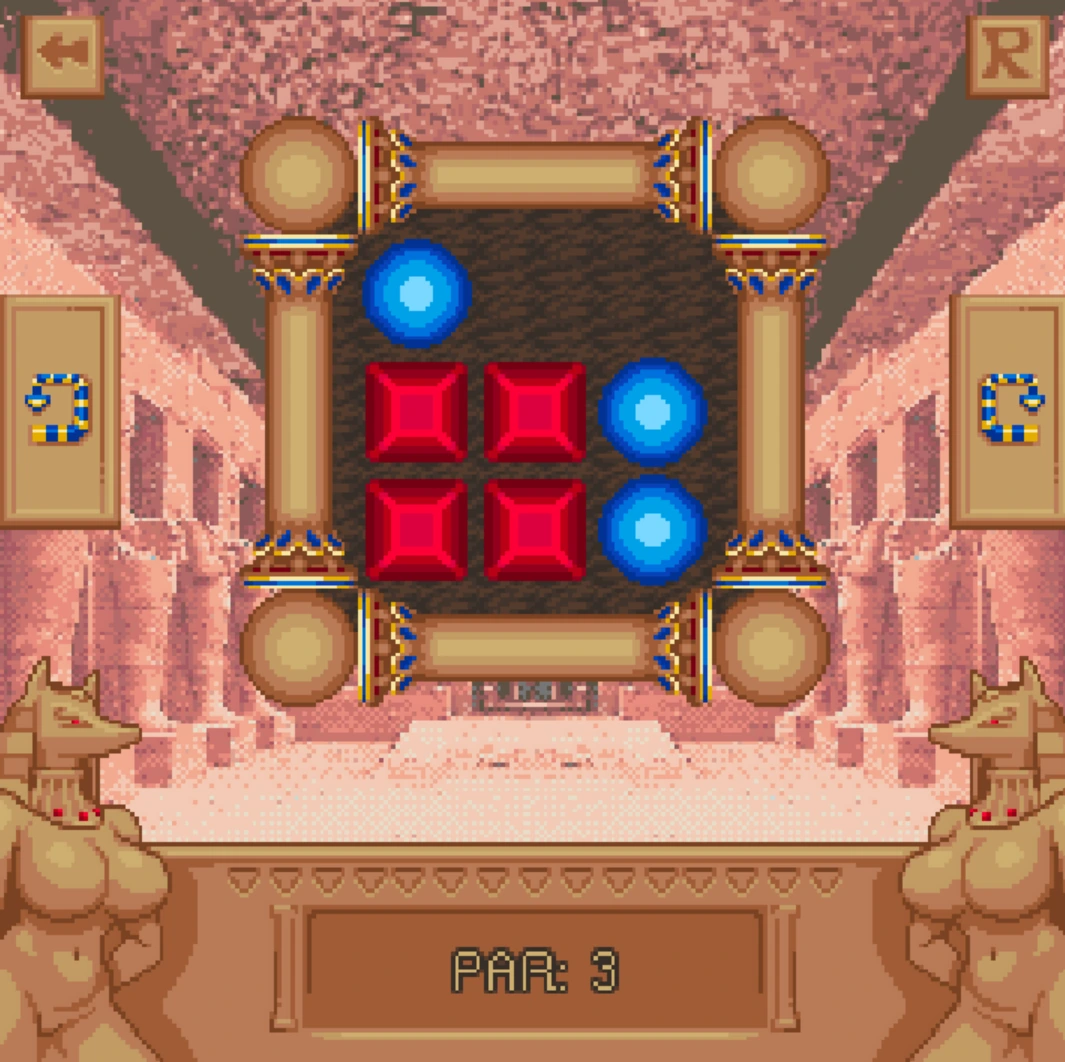
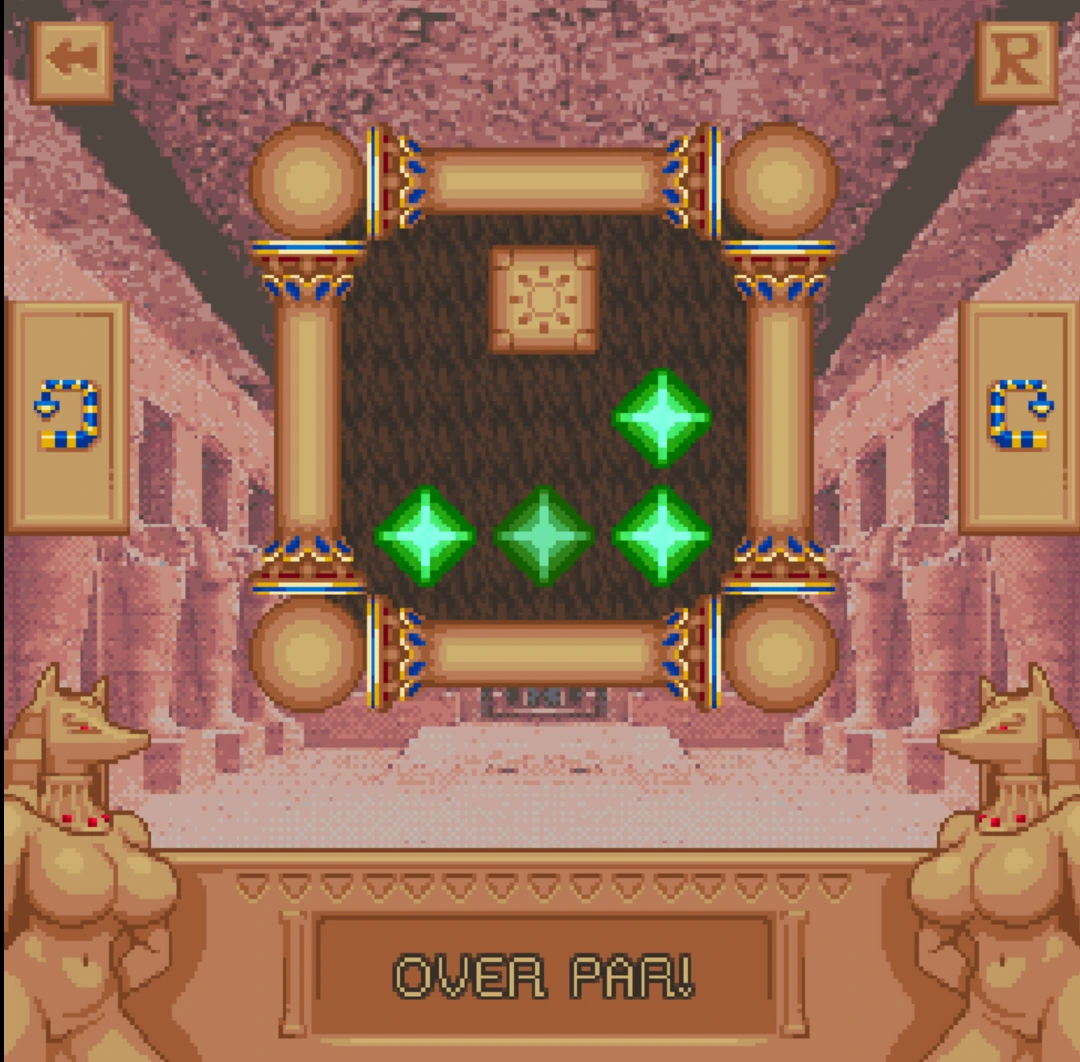
Color is the first language the temple teaches. Before moving, identify which elements share a color and which surfaces behave as boundaries, supports, or destinations. Do not assume two nearby objects belong to the same solution simply because they are visually close. The chamber can turn, so spatial distance is temporary; the relationship encoded by color is more dependable. When a route fails, describe the failure precisely. Did the character reach the wrong side of a matching area? Did an obstacle become a ceiling when you needed it to become a floor? Did momentum carry the character past a useful ledge? This vocabulary makes retries deliberate. It also helps a second player give useful advice without simply calling out directions. Saying the blue surface needs to support the next fall communicates a plan. Saying go left may stop making sense the moment the room rotates. The best solutions come from tracking relationships across orientations rather than memorizing a single picture.
Treat rotation as a planned move
The left and right rotation controls look simple, but every turn rewrites the chamber. Pause before rotating and imagine where gravity will pull the character after the movement completes. Ask three questions: what becomes the new floor, what blocks the fall, and what position will make the following turn possible? Early rooms let you learn this rhythm with generous space. Later rooms punish rotations that solve the immediate problem while leaving no useful second move. If you become stuck, work backward from the desired landing. Decide which surface must be beneath the character, then determine the orientation that creates that support. From there, look for an earlier landing that allows the final rotation. This backward method is especially helpful when an apparently obvious drop leads to a dead end. Speed is rarely the main obstacle. Clear prediction is. A short pause before a turn can save several resets and makes a complete solution feel intentional rather than accidental.
Use resets as experiments
A reset is not a verdict on your ability. It is the fastest way to test one assumption at a time. Begin a chamber with a simple hypothesis such as the first right rotation should place the character on the red edge. Make that move, observe the exact result, and update the hypothesis. Avoid changing several choices at once, because you will not know which change produced the improvement. When playing with another person, alternate between driver and observer. The driver controls the chamber while the observer predicts the landing and records the sequence in plain language. Swap roles after a few attempts. This creates a useful discussion without turning the puzzle into a stream of competing commands. It also makes the game surprisingly social: one player notices color order, another notices geometry, and both must agree on what the room will do. The compact rooms reward this method because each experiment is quick and the consequences remain visible.
Let the story arrive through progress
The restored game information describes two mature story scenes that unlock as the player advances. That structure makes puzzle completion part of the narrative pacing. The scenes are not separate prizes pasted onto an unrelated challenge; they change how the expedition and its relationship can be interpreted. This page avoids cataloging or reproducing their explicit content. Enter only if you are an adult who wants that material, and do not stream or share the scenes with people who have not agreed to see them. Between those moments, pay attention to what the temple asks from the player. Repetition, control, curiosity, and vulnerability can carry thematic weight even when a room contains no dialogue. The post-expedition activity below the game therefore focuses on your style of attention. It does not pretend there is a documented branching ending system. It asks whether you left remembering physical movement, orderly logic, or the unresolved implications around the characters.
Understand the restored presentation
This portal presents a restored browser build rather than a redesigned remake. The distinction matters. The original canvas is 256 by 256 pixels, so the game carries the crisp, constrained character of a small-format project. Fullscreen can make controls easier to focus on, but it cannot add artwork that was never present in the source. Slightly softened pixels at a very large size are expected. A desktop display gives the frame enough room while keeping the surrounding instructions readable. Keep browser zoom near its default level before deciding that an element is missing. If a key appears unresponsive, click once inside the game frame so it has keyboard focus. If the page scrolls when you intended to control the game, return focus to the frame. The surrounding site deliberately delays loading until you confirm the age notice, which reduces unwanted media requests and ensures that the warning is encountered before mature content.
Keep an adult play session considerate
Mature content changes the responsibilities around group play and sharing. Confirm that everyone who can see the screen is an adult and wants to participate before launching. Headphones are useful when privacy matters, but remember that a visible screen can still expose explicit material. Do not cast the game to a shared display, record another person's reaction, or post story scenes without clear consent. The share button on this page links to the page itself; it does not automatically capture the game or reveal a player's answers to the discussion. The interactive reading stays in browser memory and resets when the page reloads. If you discuss the story publicly, label spoilers and separate confirmed events from personal interpretation. This is especially important for a restored work with limited documentation, because speculation can easily be repeated as fact. Responsible discussion leaves room for uncertainty and helps another player discover the chambers at their own pace.
Know when to ask for a hint
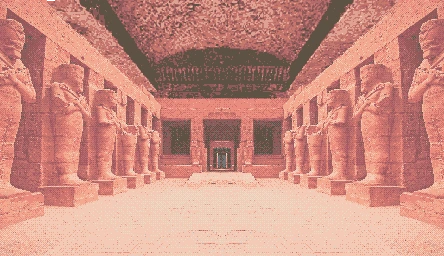
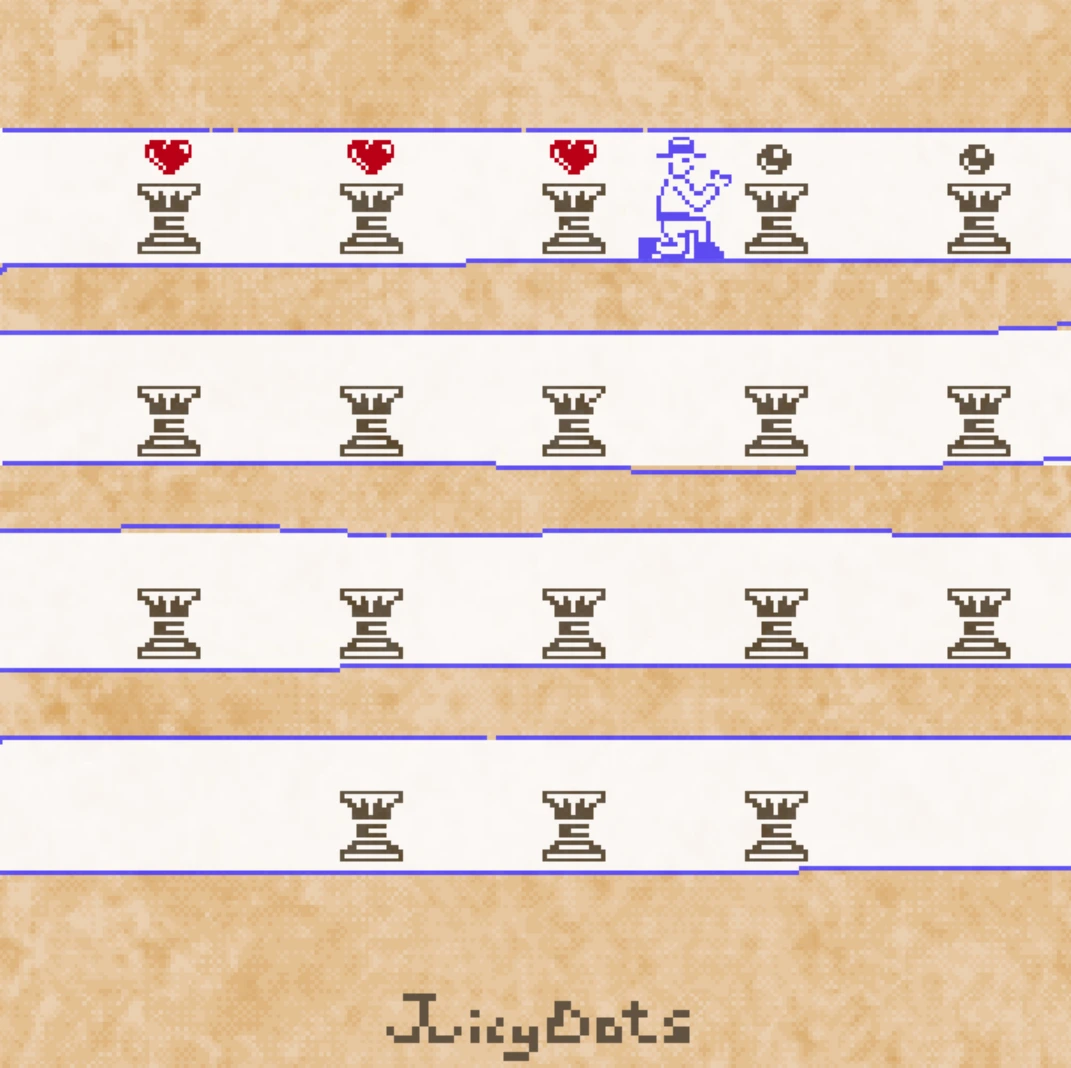
A good hint protects the moment of discovery. Instead of requesting a complete move sequence, ask for the category of mistake: color reading, starting orientation, landing position, or timing. An observer might say that the correct first move does not reach the goal but prepares the second rotation. That narrows the search without replacing the puzzle. If you provide help, reveal one relationship at a time and wait for the player to test it. Screenshots are useful because they let you mark the intended support surface without describing every input. The three images on this page can also help prospective players understand the visual language before launch, but they are not a room-by-room walkthrough. A full solution list would flatten the game's strongest pleasure—the instant when a chamber that looked contradictory becomes coherent. Preserve that instant whenever possible, particularly across the later rooms where several learned rules begin to overlap.
Finish with interpretation, not a leaderboard
When the eighteenth room is behind you, the most interesting comparison is not simply who reset least. Ask which chamber changed your understanding of rotation, which visual relationship you initially misread, and whether the story altered the meaning of the puzzles. The discussion tool provides a small structure for that conversation. Its three outcomes describe approaches rather than rank them: improvising with gravity, mapping a repeatable system, or reading the temple as a narrative artifact. A player can legitimately recognize more than one approach. Retake the questions with different answers to see how another priority changes the reading. If the game leaves you wanting a completely different rhythm, the compact Play More shelf offers The Choicer Voicer, a microphone performance game built around improvisation instead of spatial logic. The transition is intentional: finish one focused experience, choose another, and remain in the same clear portal rather than entering an unrelated external directory.
QUICK ANSWERS
Temple of the Jackal FAQ
Browser play, age requirements, room count, controls, story scope, and troubleshooting.
01Can I play Temple of the Jackal in a browser?+
Yes. This page embeds the restored web build behind a deliberate start screen. Confirm that you are an adult, select Enter the temple, and the game loads inside the player.
02Is Temple of the Jackal free to play here?+
The supplied browser build can be launched without an account or download. This is an unofficial restoration portal and not a claim about the original game's licensing or availability elsewhere.
03Why is there an 18+ confirmation?+
The game contains explicit sexual content and nudity. The confirmation prevents the mature material from loading automatically and makes the content warning visible before play.
04How many puzzle rooms are included?+
The restored game information identifies 18 puzzle rooms. Progress through those chambers also unlocks two mature story scenes.
05What do I do in each chamber?+
Read the color relationships, rotate the chamber left or right, and use the changed direction of gravity to move the character toward a viable route. Later rooms combine familiar rules in less forgiving layouts.
06Does the game have multiple endings?+
The available restored documentation confirms two unlockable mature scenes, but it does not establish a branching ending tree. The discussion activity on this page is an unofficial play-style reflection, not a list of canonical endings.
07Which device works best?+
Use a current desktop browser and a keyboard for the most predictable experience. The original presentation is a small 256 by 256 canvas, so fullscreen enlarges the image but cannot create extra source detail.
08What should I try if the iframe does not load?+
Disable aggressive script blocking for this page, confirm JavaScript is enabled, and retry in a current Chrome, Edge, or Firefox window. A managed network may block the separate game host.
09Is this an official Temple of the Jackal website?+
No. ChoicerVoicer.site is a fan-made browser game portal. It is not affiliated with or endorsed by the original developer or publisher.